Win a Copy of Patterns, Principles, and Practices of Domain-Driven Design
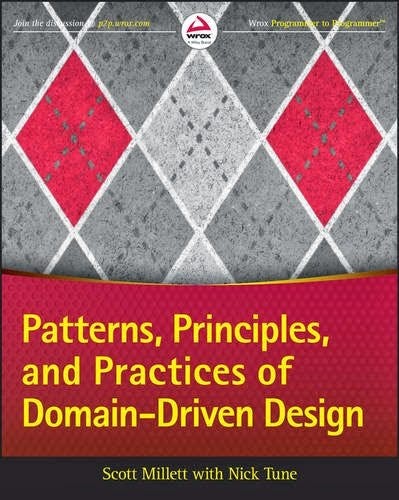
To celebrate the launch of our book, Scott Millet and I will be donating a few free copies. Just email your name or twitter handle to winpppddd@gmail.com by Friday 17th April.
If you are selected as a winner, a hard copy of the book will be posted to an address of your choice. The book comes completely unconditionally — I would love to hear your feedback though.
We will inform winners on Saturday 18th April.
A Bit About the Book
Domain-Driven Design is a development philosophy that focuses on aligning the technical teams with the business and product teams. Ultimately, by having a deeper understanding of the problem domain, developers are more effective at solving business problems and delivering value sustainably over the long-term.
DDD is the creation of Eric Evans. His much-lauded, Domain-driven Design: Tackling Complexity in the Heart of Software introduced the topic almost 15 years ago. But a lot has changed since Evans’ book was released — both the collaborative and technical aspects of DDD.
The original DDD book has also suffered criticism for being long-winded and a challenging read. Personally, I loved the book, and it fundamentally changed my approach to software development. I do concede that it could have done a better job of making the topic more accessible, though. Evans also concedes that he regrets not emphasising bounded contexts more.
And that brings us back to Patterns, Principles, and Practices of Domain-Driven Design. Our approach to writing this book has been to make the topic more accessible whilst still covering all of the advanced concepts of DDD.
In addition we took on board Evans’ regrets and put a lot of focus on the strategic aspects of DDD — like bounded contexts — towards the front of the book.
We’ve also added lots of modern updates, including examples of asynchronous messaging, event sourcing, and microservices. Equally we’ve emphasised alignment concepts like the Business Model Canvas, Event Storming, and Impact Mapping.